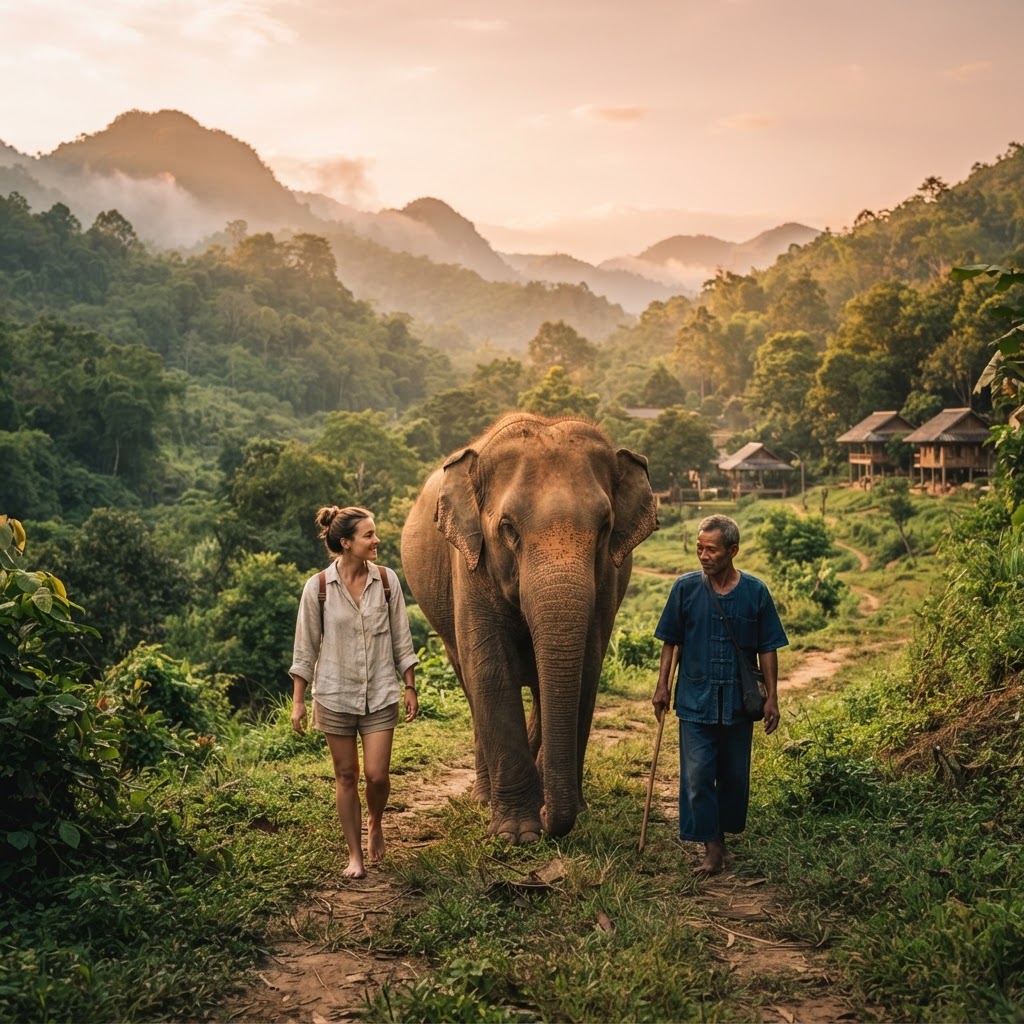
Gentle Giants: Navigating Ethical Elephant Sanctuaries in Chiang Mai
The JournalCulture

Gentle Giants: Navigating Ethical Elephant Sanctuaries in Chiang Mai

TTWU Travel Team September 14, 2026

Discover how to connect with Thailand's iconic elephants through ethical, observation-only experiences that prioritize animal welfare over traditional tourist habits.
A Morning in the Mist. The sun has barely crested the jagged peaks of the Doi Suthep mountain range, casting a golden, ethereal glow over the emerald canopy. You are standing in a forest clearing, the air heavy with the scent of damp earth and crushed teak leaves. Suddenly, the silence is broken by a rhythmic rustling. Through the foliage emerges a matriarch, her skin dusted with the fine silt of the riverbank, followed closely by a curious juvenile. There are no saddles here, no hooks, and no heavy chains. You are merely a witness to their world, observing the quiet intelligence of a species that has long been a symbol of Thailand’s soul. ## The Shift Toward Compassion. For decades, the elephant-human relationship in Thailand was dominated by logging and, later, the tourism industry’s demands for rides and shows. However, a profound cultural shift has occurred in the valleys surrounding Chiang Mai. Today, the most reputable sanctuaries operate on the principle of 'hands-off' interaction. These sanctuaries are not zoos; they are expansive, protected landscapes where rescued elephants are finally allowed to live according to their own social structures. Choosing an ethical sanctuary means you are supporting the rehabilitation of animals that have often endured lifetimes of strain. ## Defining Ethical Excellence. When you are looking to book your experience, look for transparency. A truly ethical sanctuary will strictly prohibit elephant riding, which causes permanent spinal damage, and will avoid unnatural performances like painting or ball-playing. Instead, look for programs that offer 'observation-only' tours. You might spend your morning hiking alongside a herd through the jungle, watching them forage for wild bamboo or mud-bathe in a natural creek. The goal is to minimize human interference, allowing the elephants to dictate the pace of the day. If the sanctuary allows you to feed them from a distance or walk with them while keeping a respectful space, you are likely in the right place. ## Your Role as an Observer. As you prepare for your journey, consider that your presence is part of a larger economic ecosystem. By choosing a sanctuary that prioritizes the welfare of the elephants over the volume of visitors, you are signaling to the industry that compassion is the new standard of luxury. Pack light, wear neutral-colored clothing to avoid distressing the animals, and bring a camera with a good zoom lens. Capturing a photograph of a giant flapping its ears in the cool afternoon breeze is a far more profound souvenir than a selfie atop a distressed animal. ## Practical Tips for Your Visit. First, book well in advance, as reputable sanctuaries intentionally limit daily visitor numbers to keep the environment quiet and stress-free. Second, check if the sanctuary is accredited by international wildlife welfare organizations or works closely with local veterinarians who specialize in pachyderm health. Third, ensure the sanctuary is transparent about where your money goes; premium operators often fund community initiatives, forest reforestation, or secondary rescue operations for other animals. When you walk back to your transport at the end of the day, you will leave with more than just photographs. You will leave with the quiet hum of the forest in your ears and the realization that the most rewarding travel experiences are those that ask nothing of the animals but allow them everything.

More from the journal